1. Arrival in Montréal and the First Encounter with the City’s Pulse
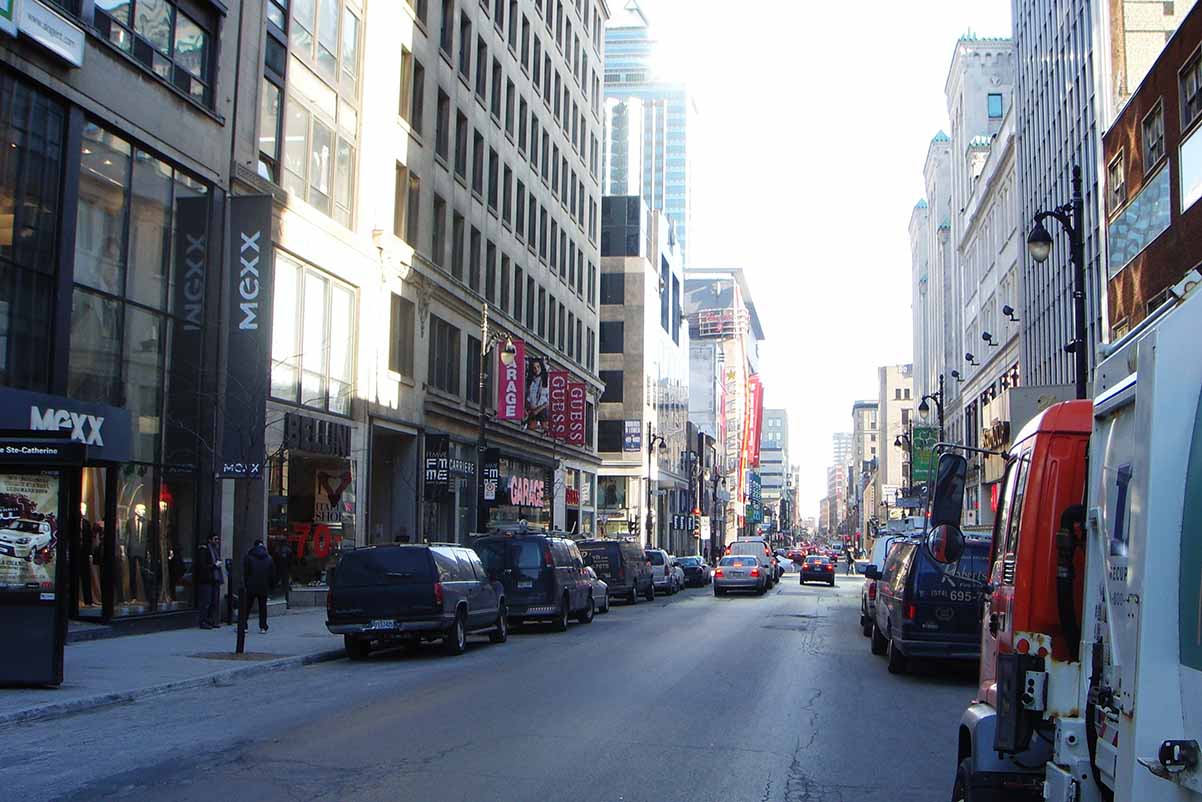
When I arrived in Montréal, I stepped into a city where the echoes of history walk shoulder-to-shoulder with the whispers of modernity. The air was crisp and bright, with late spring clinging to the final chill of winter. Maple leaves fluttered down Sainte-Catherine Street, catching the golden slant of morning light as if nature itself was trying to show me the way. My hotel was just a few blocks from Place des Arts, and without needing a map, my feet instinctively led me to where Montréal breathes the loudest: Sainte-Catherine Street.
This legendary stretch isn’t just Montréal’s main commercial artery—it’s a tapestry of fashion houses, independent boutiques, bustling plazas, department stores, and art-infused sidewalks. It’s lined with more than just shops—it’s lined with stories, and I was determined to walk through every one of them.
2. Morning Walk: From Peel to Saint-Laurent
Starting near Peel Street, where the luxury brands cluster in well-lit windows like precious gems, I began my slow stroll eastward. This is the part of Sainte-Catherine that wears a tailored blazer—Café Holt was serving its early clientele as I passed, a soft murmur of French and English rising under the aroma of roasted espresso beans.
Holt Renfrew Ogilvy, sitting like a queen on her marble throne, drew me in with quiet gravity. Walking through its polished floors felt like floating through a fashion museum—Chanel, Dior, Balenciaga—all commanding attention. I tried on a pair of sleek Saint Laurent boots I had absolutely no intention of buying. The attendant smiled knowingly. Sometimes, trying something on is part of the ritual.
Just a few blocks down, Simons offered a completely different flavor. Multilevel, beautifully lit, and carefully curated, Simons blends luxury and accessibility in a way that’s uniquely Canadian. I ended up buying a structured navy trench from their in-house label. It felt like a piece I’d wear for years—a Montreal souvenir stitched with northern practicality and urban elegance.
3. Side Streets and the Surprises They Hold
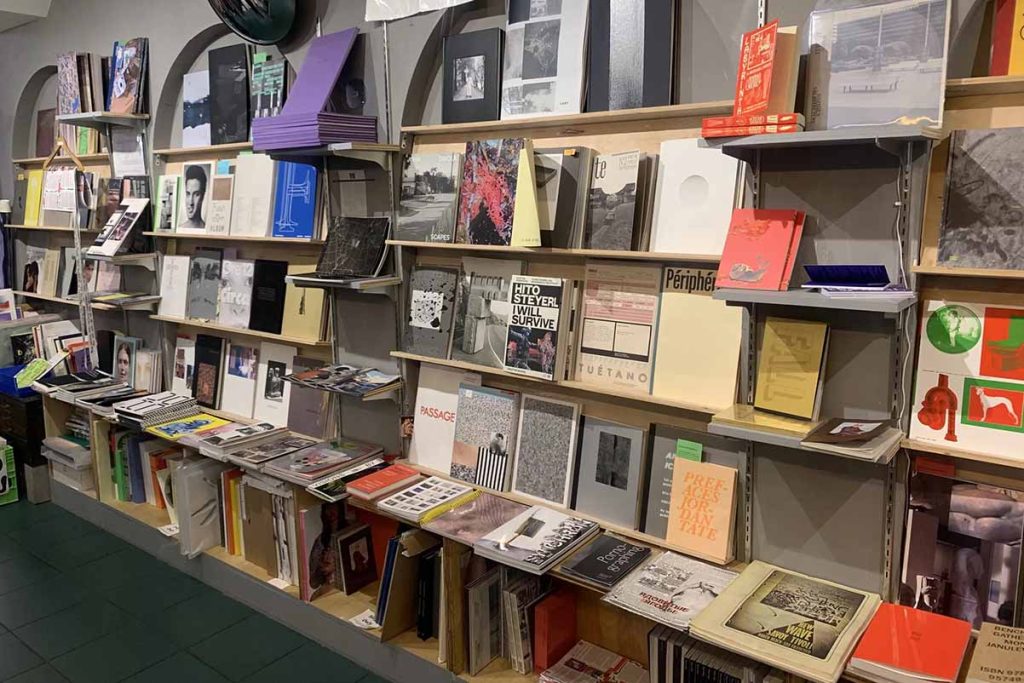
Stepping off Sainte-Catherine onto side streets like Crescent or Bishop always brings rewards. On Bishop, I found a tiny art bookstore tucked between a wine bar and a bakery. Inside, the owner was unpacking a shipment of prints from a local illustrator whose work mixed gothic cathedral motifs with urban graffiti. I bought two—rolled them up in kraft paper and carried them under my arm like an old-world newspaper.
Lunch was at a little bistro on Crescent, with a patio just far enough from the main drag to feel like a secret. I watched the flow of street life over a plate of duck confit and an amber glass of Unibroue. Montréal doesn’t just offer you food—it composes meals like jazz, improvising with confidence.
4. The Art That Moves with You
Back on Sainte-Catherine, the street itself began to morph. Near the Place des Arts, fashion takes a backseat to creativity. Here, the Quartier des Spectacles stretches out like an open canvas. I stood for several minutes in front of a public art installation—a set of oversized musical swings that played notes as people swayed. Laughter and melody mixed midair.
On the concrete just beside the MAC (Musée d’art contemporain), there were chalk drawings left behind by anonymous artists. One was of Leonard Cohen in bold pastel strokes. Another depicted a fox sleeping in a bed of tulips. I didn’t know how long they would last, but I knew they belonged there, right between shoe stores and subway stations.
5. Underground City: The Labyrinth Below
It’s impossible to talk about shopping in Montréal without dipping into the Underground City. Beneath Sainte-Catherine Street lies RESO—a 32-kilometer subterranean network of shops, metro stations, walkways, food courts, and small wonders.
I entered near McGill and emerged somewhere near Complexe Desjardins. Along the way, I passed pop-up boutiques selling minimalist home goods, Québécois design collectives, and small electronics stores that felt like time capsules from the late ‘90s. Everything was lit in a soft amber glow, slightly surreal, as if the world above didn’t quite exist.
In one corridor, a trio of violinists played Vivaldi in front of a shoe store. In another, a tiny kiosk sold handcrafted jewelry made from local stone. I bought a simple pendant carved from serpentine—it felt cold in my hand, smooth as water-polished driftwood.
6. Late Afternoon Light and the Eastward Vibe
The further east you walk on Sainte-Catherine, the more bohemian things become. Once past Saint-Denis, the street seems to loosen its collar, lean against a wall, and light a cigarette. It becomes younger, louder, a little more reckless—and I loved it.
I stopped at a thrift store called Annex Vintage. The owner had lined the windows with denim jackets and neon windbreakers. Inside, I found a leather bag that smelled like history and a pair of round sunglasses I’d never wear anywhere else but here.
Down the block, another boutique specialized in handmade candles. The scents were named after Montréal neighborhoods—”Le Plateau After Rain,” “Verdun Snowfall,” “Saint-Henri Midnight.” I bought three, even though I had no room in my suitcase.
7. A Pause for Coffee and Reflection
Somewhere between Berri-UQAM and Papineau, I ducked into Café Nocturne. The barista made me a cappuccino with a flourish and asked if I was from out of town. We talked about how Sainte-Catherine has changed over the years. He pointed out that even though the big-name stores come and go, the street always retains its character—it adapts without losing itself. He was right.
I sat by the window and watched the world walk by. Street performers danced. A couple argued quietly near a crosswalk. Teenagers took selfies under a mural of a giant eye. The city kept unfolding like a film reel.
8. Nightfall and the Neon Pulse
As the sun dipped behind Mont Royal, the lights along Sainte-Catherine began to glow brighter. The red-brick facades and iron balconies took on a warmer hue. Near the Village, the famous pink (now rainbow) balls strung above the pedestrian path shimmered in the dusk.
This stretch of Sainte-Catherine feels like an entirely different planet. LGBTQ+ flags wave proudly from nearly every storefront. Music pulses from open doors—electro, drag pop, reggaeton. I found myself wandering into a gallery called Never Apart, where a multimedia installation on queer history was running. It was poignant and unapologetically raw.
Dinner was late. A noodle bar just east of Papineau served up steaming bowls of ramen with Montréal twists—smoked meat miso, pickled beet tempura, maple soy glaze. I devoured it in silence, feeling my legs ache in that good way you only get after walking all day.
9. Rainy Day Returns: A Different Lens
The next morning brought rain—gentle, rhythmic, persistent. I returned to Sainte-Catherine with an umbrella and no expectations. The city felt hushed under the gray sky. Puddles mirrored traffic lights. Fewer people were out, which made the shops feel more intimate.
In Indigo, I got lost in the magazine section. I bought a notebook covered in vintage Montréal maps and wrote a few pages while drinking a ginger latte. I wandered back through the underground, then up again into the Eaton Centre. It was quiet enough to hear the buzz of escalators and the soft announcements over the PA system. I tried on a wool coat I didn’t need and bought a set of art markers I’ll probably never use.
10. Sainte-Catherine and the Language of Style

Walking the full length of Sainte-Catherine Street—slowly, deliberately, repeatedly—feels like reading a book that rewrites itself each day. Its language is not just fashion, but rhythm, rebellion, craftsmanship, and contradiction.
I saw an elderly woman in a Chanel coat walking beside a punk with a pink mohawk and fishnet sleeves. I saw tourists snapping photos of murals while locals sidestepped them to catch their bus. I saw a man sitting on a bench holding a bouquet of red tulips for someone who never showed up.
There’s no one story here. There are thousands, and they all cross somewhere on this street.
11. Fashion as Experience, Not Performance
What stuck with me wasn’t what I bought, but what I felt trying things on. A silk scarf in a minimalist shop made me feel like I belonged in a Godard film. A leather jacket in a vintage store made me want to ride a motorcycle I don’t own. A perfectly-fitted pair of jeans reminded me that sometimes, the right garment is less about trend and more about truth.
Every piece of clothing on Sainte-Catherine seems to carry intention. Whether it’s a mass-market hoodie or a handmade wool cardigan dyed with birch bark, it belongs somewhere—in a season, in a memory, in someone’s narrative. The shops here don’t just sell—they invite.
12. Art at Your Feet, Fashion Overhead
The murals along Sainte-Catherine’s east end are vivid and proud. Giant faces, sweeping colors, surreal creatures—many of them political, some whimsical, all striking. They aren’t behind velvet ropes. They tower over discount stores and spill into alleyways. They’re part of the street, not decoration.
On my third day, I found a pop-up artisan market in a parking lot near Beaudry. Tables were covered in textiles, ceramics, indie zines, and hand-stitched notebooks. One vendor sold jackets sewn from recycled denim and painted with quotes from French philosophers. I bought a postcard that read, “La rue parle plus fort que les livres.” The street speaks louder than the books.
13. The Quiet Walk Back
The last walk back along Sainte-Catherine was slower. Not just because my legs were sore or my bag was heavier, but because I wanted to make time stretch. The city had etched itself into me—through style, through rain, through the faces of strangers and the weight of new things in my hands.
Passing again by Place des Arts, the streets hummed with the soft life of early evening. The swings still played their tune. The wind tugged at café awnings. Somewhere far down the street, a saxophone played the opening notes of “Autumn Leaves.”